


5 Reasons Home Inspection Importance Saves Your Wallet
A home inspection is a professional assessment of a property's condition, uncovering hidden safety risks, structural flaws, and maintenance needs. Understanding home inspection importance allows buyers to negotiate repairs, budget for future costs, and proceed with confidence rather than falling into a bottomless and expensive money pit.
Key Takeaways for Smart Buyers
- Uncover Safety Hazards: Identify issues like faulty wiring or mold before they become dangerous.
- Budgeting Tool: Get a clear picture of upcoming maintenance costs (like a 20-year-old HVAC).
- Negotiation Leverage: Use the findings to ask for repairs or price reductions.
- Peace of Mind: Transition from "falling in love" with a house to "making a smart investment."
- Educational Experience: Learn how to actually operate and maintain your new home’s systems.
Why is home inspection importance often underestimated by buyers?
In the whirlwind of finding a home in Northwest Ohio, it is remarkably easy to get blinded by the "sparkle." You see the quartz countertops, the trendy shiplap, and the open floor plan that screams, "I am perfect for your future dinner parties!" However, houses are a lot like dating profiles—everyone puts their best foot forward, but you really need to see what’s happening when the filters are off.
Home inspection importance is often underestimated because buyers view it as a final hurdle or a "test" the house might fail. In reality, it is more like an X-ray. You wouldn't buy a car without checking the engine, yet many people are tempted to waive inspections in competitive markets just to get their offer accepted. This is the real estate equivalent of jumping out of a plane and hoping your backpack contains a parachute and not just a very heavy collection of bricks.
Skipping the inspection means you are essentially volunteering to pay for the previous owner's mistakes. Whether it's a foundation that’s slowly turning into a topographical map of the Swiss Alps or a roof that’s held together by prayer and three layers of shingles, the inspector is the only person standing between you and a financial nightmare. At Why Not You?, we believe you deserve to know exactly what you’re walking into.
What are the common red flags uncovered during a home inspection?
When an inspector walks through a home, they aren't looking at the paint colors; they are looking for the "silent killers" of real estate deals. Here are the five most common red flags that emphasize the home inspection importance:
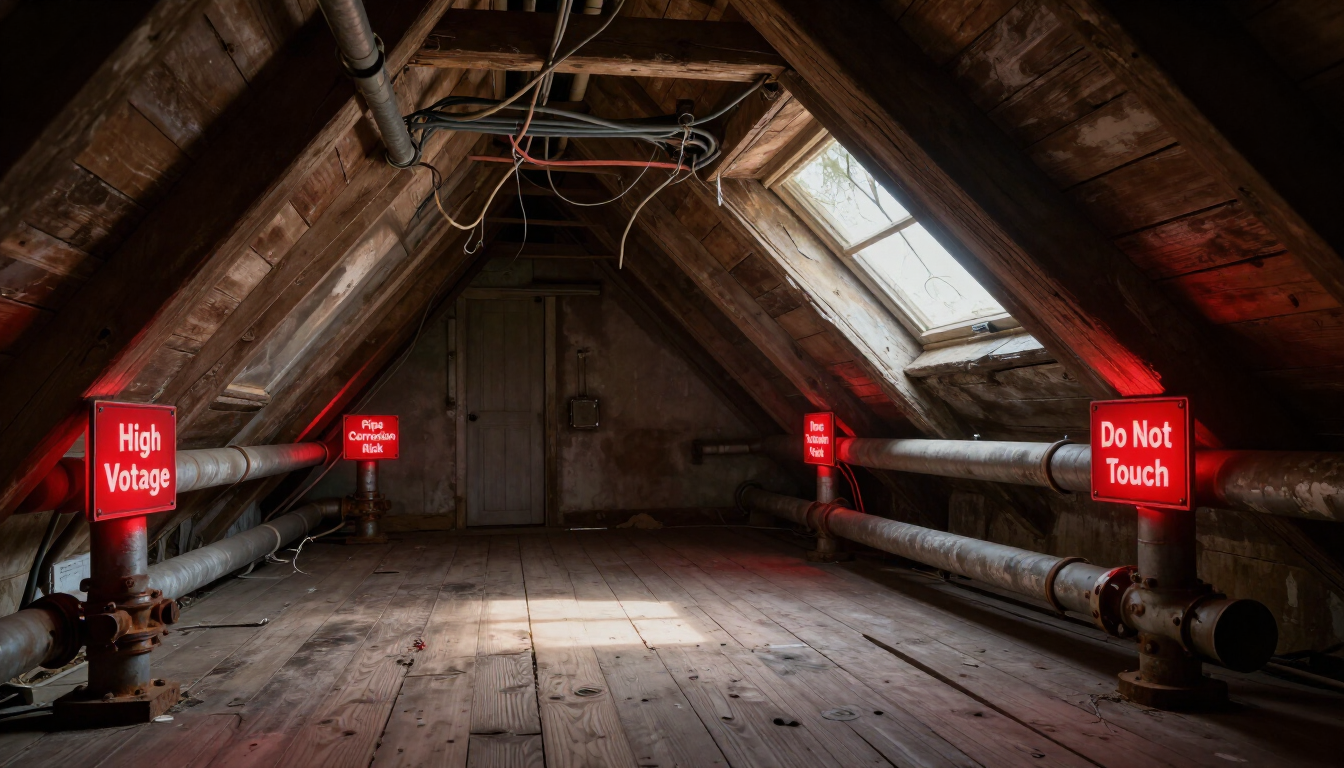
- Electrical Gremlins: Outdated wiring, like knob-and-tube or aluminum wiring, can be a massive fire hazard. Also, watch out for those "DIY special" electrical panels where everything is held together with electrical tape and hope.
- Structural Sinking Feelings: Cracks in the foundation aren't just "character." Large horizontal cracks or significant bowing in basement walls can indicate serious structural instability.
- The Surprise Indoor Waterfall: Water is the enemy of every house. Inspectors look for signs of past flooding, active leaks in the plumbing, or roof damage that could lead to mold and rot.
- Environmental Hazards: Lead paint, asbestos, and radon are the uninvited guests nobody wants. Radon, in particular, is a common issue in Northwest Ohio that requires a specific test.
- Pest Parties: Termites and carpenter ants don't pay rent, but they sure do love to eat your equity. An inspection will find the tell-tale signs of wood-destroying insects.
Major Home Systems: The Anatomy of Your Investment
To truly grasp home inspection importance, you have to think of a house as a living organism. The HVAC is the lungs, the plumbing is the circulatory system, and the electrical is the nervous system. If one of these fails, the whole body—and your bank account—suffers.
During a professional inspection, every one of these systems is poked, prodded, and tested. The inspector will check the age of the furnace and air conditioner. In Northwest Ohio, where our winters can feel like a scene from The Revenant , a dying furnace isn't just an inconvenience; it’s an emergency. If the unit is 25 years old, it’s basically on life support. Knowing this allows you to budget for a replacement before it quits on a -10 degree Tuesday in January.
Plumbing is another area where "out of sight, out of mind" is a dangerous philosophy. Older homes in areas like Toledo or Perrysburg may still have galvanized pipes or, worse, sewer lines that are being slowly strangled by tree roots. An inspector can recommend a sewer scope—a literal camera trip down your pipes—to ensure you aren't about to face a five-figure sewage backup. This is why learning about my approach is so vital; I want you to have the full picture before you sign on the dotted line.
Is a negative inspection report always a deal-breaker?
One of the biggest misconceptions about home inspection importance is that a "bad" report means you shouldn't buy the house. This couldn't be further from the truth. In fact, there is no such thing as a "perfect" inspection report. Even brand-new builds often come back with a punch list of items that need fixing.
The goal of an inspection is education , not just elimination. A detailed report gives you a roadmap for future ownership. It tells you which items are urgent (safety and structure) and which items are just "good to know" (a leaky faucet or a cracked window pane).
When we see a list of issues, we don't panic—we strategize. If the inspector finds that the water heater is leaking, we don't necessarily walk away from the house. Instead, we use that information to decide our next move. Does the seller fix it? Do they give you a credit at closing so you can pick out your own high-efficiency model? This is where the magic happens. Without the inspection, you’re just guessing. With it, you’re negotiating from a position of power.
The Financial Power of Negotiation
Let’s talk turkey. Or dollars. Home inspection importance is directly tied to your net worth. If an inspection uncovers $10,000 worth of necessary repairs, that is $10,000 that stays in your pocket if we negotiate a seller credit or a price reduction.
In many cases, the cost of the inspection (usually a few hundred dollars) pays for itself ten times over. Think of it as the best ROI you’ll ever get in the real estate process. As your guide in Northwest Ohio, I help you interpret the inspector’s findings to determine what is a "must-have" repair and what is a cosmetic annoyance.
If you are thinking about selling your home , a pre-listing inspection can be just as valuable. It allows you to fix issues on your own terms before a buyer’s inspector finds them and uses them as a bargaining chip to beat you down on price. Transparency wins every time.
How does deferred maintenance impact your long-term wealth?
Deferred maintenance is a fancy way of saying "ignoring problems until they get expensive." Home inspection importance shines here because it forces you to look at the boring stuff. A small gutter leak today is a rotted fascia board next year and a flooded basement the year after that.
Buying a home is the beginning of a long-term relationship. The inspection report is essentially the "user manual" for that relationship. It tells you where the main water shut-off is, how often to change your furnace filters, and why you should probably stop that drip in the guest bathroom sooner rather than later.
By staying on top of the small things identified in your report, you protect the value of your asset. When it eventually comes time to sell, a well-maintained home will always command a higher price and a faster closing. Ignoring the inspection findings is like ignoring the "Check Engine" light in your car—eventually, the bill is going to come due, and it won't be cheap.
Your Northwest Ohio Home Buying Strategy
Navigating the real estate market in Northwest Ohio requires a mix of local expertise and a bold, people-first philosophy. Whether you’re looking at a historic Victorian in the Old West End or a modern suburban home in Sylvania, the rules of home inspection importance remain the same. You deserve an advocate who isn't afraid to tell you when a house is a lemon.
At Why Not You?, Benjamin Rozzell IV is dedicated to helping you unlock your "Why Not" moment. That means moving with confidence, knowing that your new home is a safe, sound, and savvy investment. We don't just want to sell you a house; we want to help you build a life in a space that won't fall down around your ears.
If you have questions about the buying process or are ready to start your journey, don't hesitate to contact us . We’re here to make sure your home inspection is the tool that builds your future, not the wall that blocks it.
Final Summary: Why You Can’t Afford to Skip the Inspection
Home inspection importance lies in its ability to transform a stressful, emotional purchase into a logical, informed business decision. By identifying safety hazards, uncovering expensive deferred maintenance, and providing a platform for negotiation, a professional inspection protects your physical safety and your financial health. Remember, the goal isn't to find a perfect house—it's to find a house whose flaws you understand and can afford to manage.
- Evaluate: Look past the staging and see the systems.
- Investigate: Hire a pro to dig into the attic, crawlspace, and electrical panel.
- Negotiate: Use the data to get the best possible deal.
- Maintain: Use the report as a guide to keep your home in top shape.
- Succeed: Close with the peace of mind that only comes from knowing the truth.